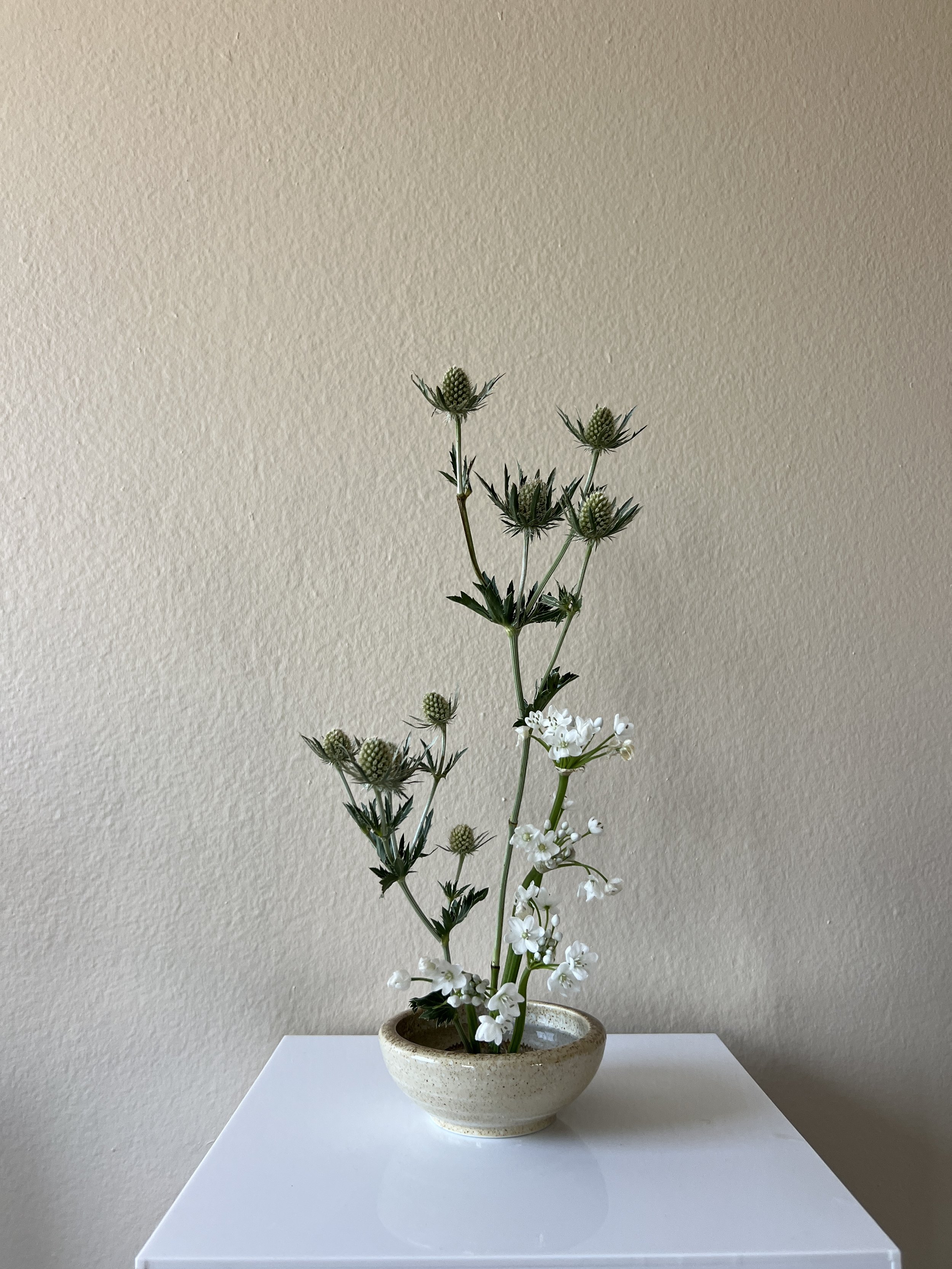
SEASONAL PRACTICE
Nature as teacher
Stillness, endurance, conversation & preparation
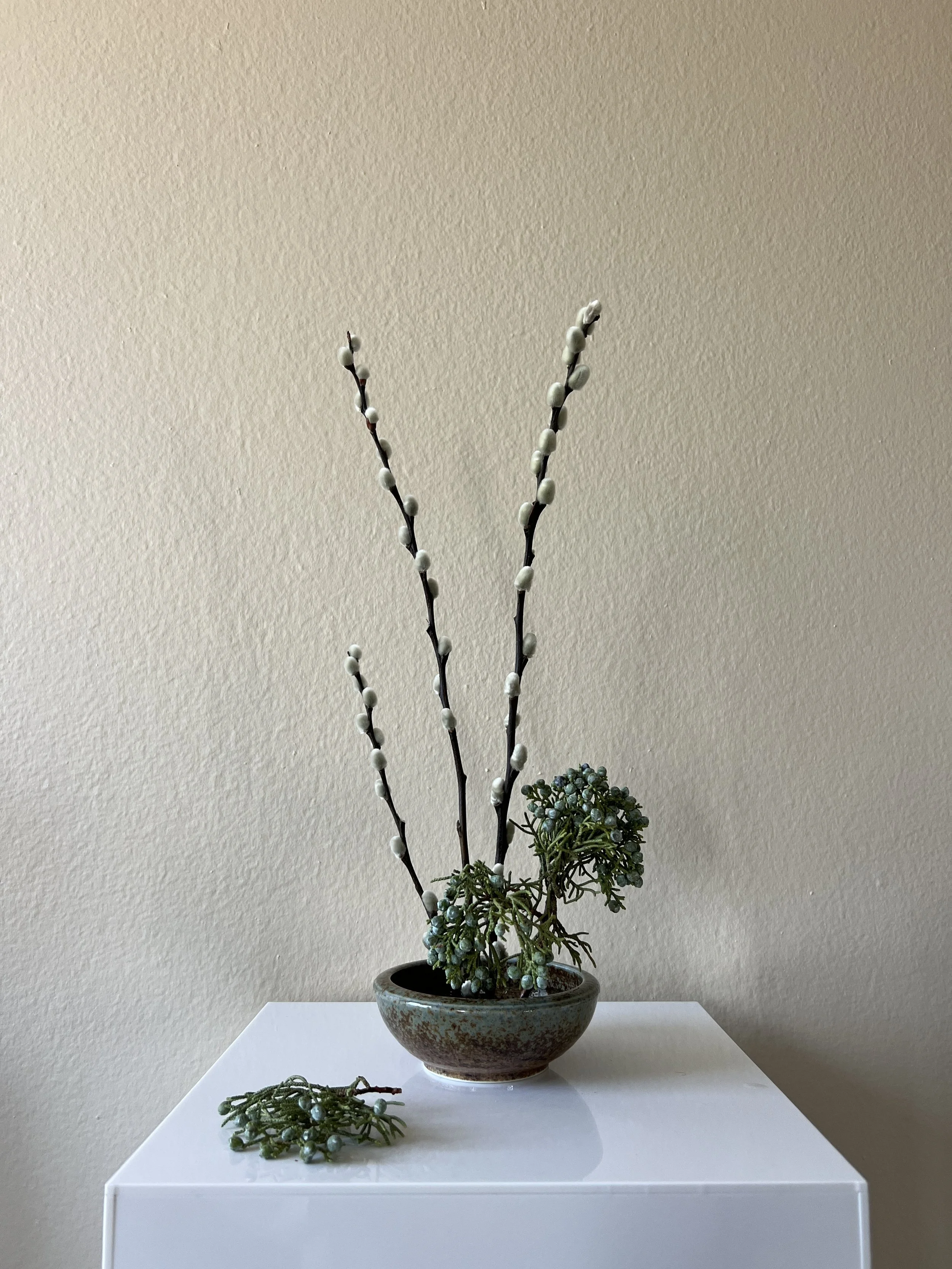
“Though frosts come down
night after night,
what does it matter?
they melt in the morning sun.”
WINTER
Materials for WINTER Arranging
Branches: Pine, magnolia, manzanita, and curly willow are popular choices for their structure and form.
Evergreens: Pine and other evergreen foliage provide texture and a splash of color, symbolizing enduring life.
Winter Blooms/Berries: Camellia, narcissus, cyclamen, rosehip, and winterberry are used for subtle pops of color.
Man-made Elements: Metal containers or dried leaves can be incorporated to enhance the minimalist aesthetic and capture the cold ambiance.
“Wisdom comes with winters.”
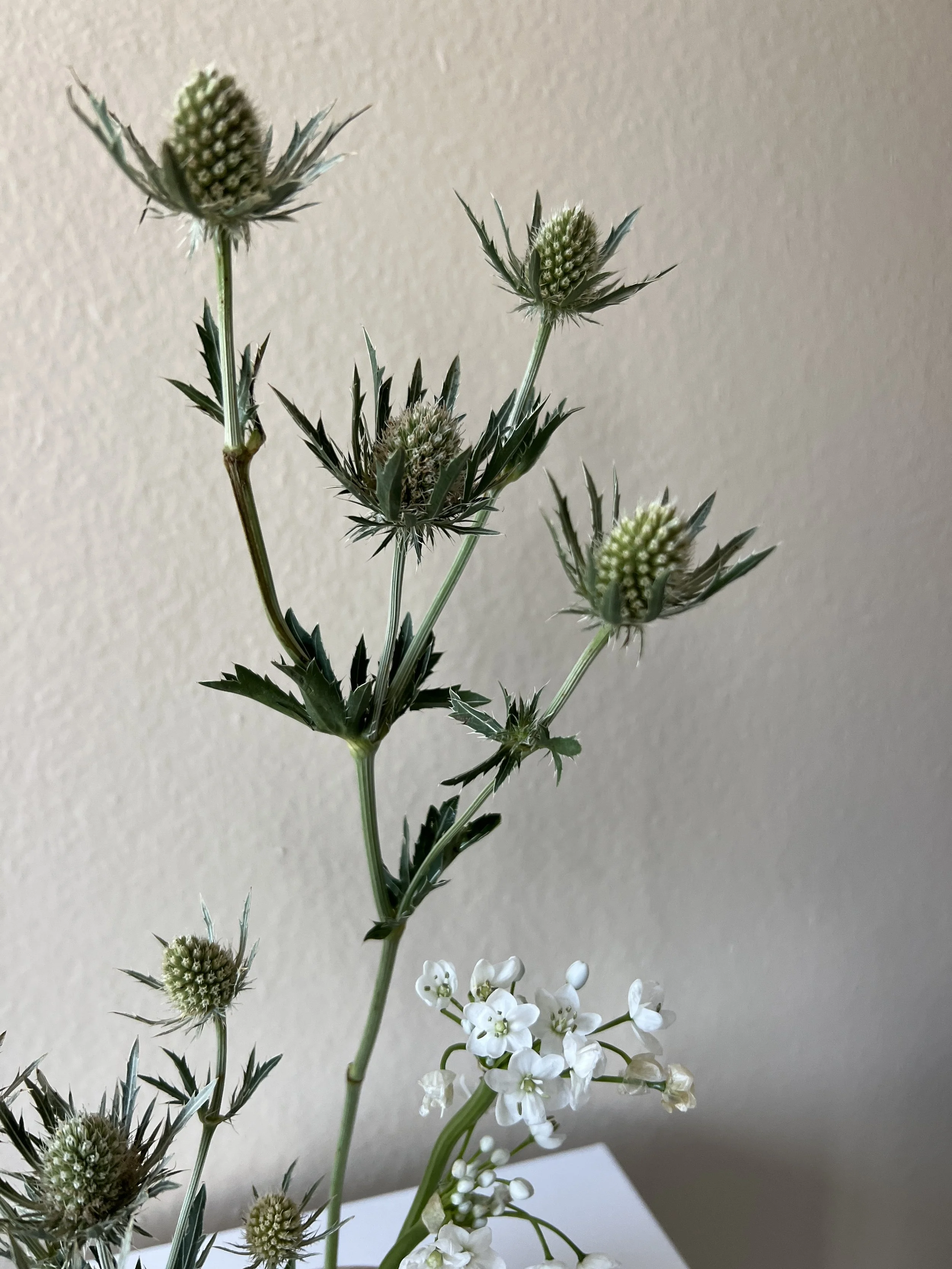
“Winter is nature’s sleep.”
Beauty in decay, emptiness, and asymmetry
In Japan, Ikebana helps practitioners experience the changing seasons even when nature feels distant. In the seemingly non-seasonal California, your arrangement becomes the season itself, a portal to presence and connection.
Winter practices and philosophy
Focus on endurance: Winter ikebana highlights the quiet strength of nature during the cold season, using materials like pine, bamboo, and evergreen branches to symbolize longevity and resilience.
Embrace minimalism: Arrangements are often ascetic, revealing the beauty of bare branches and dried leaves, using space intentionally to create a sense of stillness.
Highlight seasonal color: The practice finds color in hardy winter flowers such as camellias and daffodils, or in the vibrant, sculptural foliage of plants like Lily’s.
Create a feeling of intimacy: The arrangements can evoke a solitary intimacy with the landscape, emphasizing the subtle beauty that emerges when other plants are dormant.
Composition and Style Tips
Let the branches speak first, they tell the story of shape, gesture, and season.
Use negative space generously. Fall arrangements benefit from quiet, spare compositions.
Embrace “imperfection”: a cracked leaf, a drooping petal, or a twist in the stem adds meaning.